

The advanced facelift technique that lifts the deeper facial structures — not just the skin — for a natural, undetectable result. Whether you've been picturing a more rested profile while walking through London, New York or Sydney, our Istanbul and Izmir surgeons deliver it for up to 50% less.
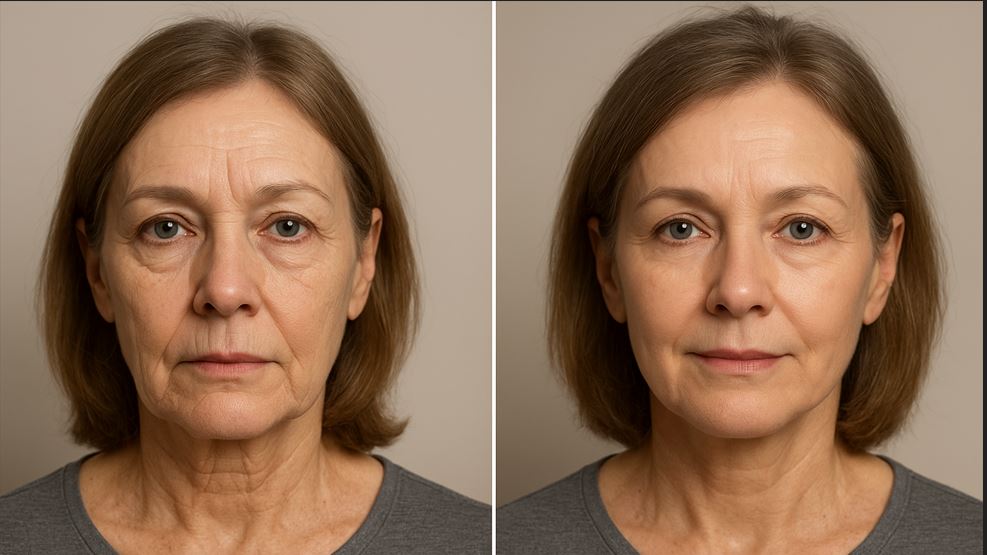
Thinking about a deep plane facelift in Turkey? This advanced facelift technique repositions the SMAS and the deeper facial layers as one unit — not just the skin — which is why a well-performed deep-plane facelift tends to age better and look less "done" than an older-style lift. Below is a quick summary of the procedure, followed by how our Istanbul and Izmir facelift surgeons compare to facelift surgery in the UK, the US, or the Gulf.
What it is: A facelift technique that lifts the SMAS, facial muscles and skin together as a single unit, repositioning sagging tissue at its source instead of just tightening the skin.
Best candidates: Patients roughly 45–70 years old with moderate to advanced jowling, nasolabial folds or midface descent who want natural, long-lasting results.
Where it's performed: Private clinics in Istanbul and Izmir, Turkey, by board-certified surgeons specifically trained in deep-plane and endoscopic facelift technique.
Recovery: 7–10 days in Turkey; visible bruising and swelling settle within 2–3 weeks; final results mature over 3–6 months.
How long results last: Typically 10–15 years — longer, on average, than a traditional SMAS facelift.
Price: Up to 50% less than an equivalent all-inclusive deep plane facelift in the UK, USA, Canada, Australia, New Zealand, Dubai or Saudi Arabia.
A facelift remains the most effective way to reverse midface and jawline sagging, but not all facelifts are equal. Most traditional techniques work on the skin and the surface of the SMAS layer — the deep plane facelift goes further.
Instead of simply pulling the skin tighter, the surgeon releases the retaining ligaments beneath the SMAS and lifts the skin, muscle and fat pads of the midface as a single, unified flap. This repositions descended tissue back toward its youthful position, rather than stretching skin over tissue that is still sagging underneath.
Because tension is placed on deeper structural tissue rather than the skin itself, a well-executed deep plane facelift avoids the tight, "windswept" look — and tends to age more naturally over time.
It requires a very precise, nerve-safe dissection close to the facial nerve branches, which is why this technique is generally reserved for surgeons with dedicated, specific training in the deep-plane approach.
Fine incisions are hidden within the hairline and around the ear to minimize visible scarring.
The surgeon carefully dissects beneath the SMAS layer, working close to — but protecting — the facial nerve branches.
Retaining ligaments are released so the midface fat pads and jawline tissue can be lifted and repositioned as one unit.
With the deeper structure already lifted, the skin is redraped with minimal tension for a natural, refreshed finish.
Longer-lasting correction of jowls, nasolabial folds and midface sagging, with a finish that reads as rested — not operated on.
Because the deeper facial layers are repositioned, results tend to hold up longer than a skin-only or SMAS-plication facelift.
Minimal skin tension avoids the artificially tight, "windswept" appearance associated with older facelift techniques.
It is widely reported in the beauty and entertainment press as the facelift technique most requested by Hollywood stars and red-carpet regulars — prized for how naturally it ages, not just how it looks on day one.
Jowls, nasolabial folds and midface descent are addressed together with a single, unified tissue movement rather than isolated fixes.

American actress Denise Richards — known worldwide for Starship Troopers (1997), Wild Things (1998) and her role as Bond girl Dr. Christmas Jones in The World Is Not Enough (1999) — has spoken publicly about choosing a deep plane facelift. After more than two decades in front of the camera, from blockbuster films to reality television with Denise Richards: It's Complicated and The Real Housewives of Beverly Hills, her decision reflects what many patients look for today: a refreshed, rested face that still moves and looks like their own.
That is precisely what the deep plane technique is designed to deliver. Because the SMAS layer, facial muscles and skin are repositioned together as one unit, the midface and jawline are lifted at their source — without the tight, "pulled" appearance of older facelift techniques, and with results that tend to age more naturally.
Denise Richards is cited here only as a publicly reported example of the technique's popularity. She is not a Medespoir patient, and her mention does not imply any association with or endorsement of Medespoir.
Considering the same technique? Our Istanbul and Izmir surgeons, Dr. Tolgahan Alpaydin and Dr. Orhan Fahri Demir, are trained in the deep-plane approach, with all-inclusive packages priced up to 50% less than in the UK, USA, Canada, Australia, Dubai or Saudi Arabia. See the full package details →
Whether you're weighing your first facelift or considering revision surgery after a previous lift elsewhere, the deep plane approach is suited to two common profiles.
At this stage, jowling and early nasolabial folds are often still correctable with a strong, natural lift. Addressing the deeper tissue now, rather than waiting, is part of why results in this group tend to last the longest — often 10 to 15 years.
Patients with more advanced midface and jawline sagging, or those unhappy with a skin-only facelift performed elsewhere, are often excellent candidates for the deep plane technique, since it addresses the structural cause rather than pulling on already-stretched skin.
A deep plane facelift is technically demanding — it requires precise, nerve-safe dissection close to the facial nerve. Medespoir works with two Turkish surgeons whose specific training addresses exactly that.
25 years of experience in plastic, reconstructive & aesthetic surgery, with training specifically dedicated to the deep-plane approach.
Plastic, Reconstructive & Aesthetic Surgery specialist with additional craniofacial and microsurgery training — the anatomical precision a deep plane dissection calls for.
A deep plane facelift lifts the SMAS layer, facial muscles and skin together as a single unit, rather than tightening the skin alone. This repositions sagging midface and jawline tissue at its source, producing a natural result that avoids the tight, "pulled" look of older facelift techniques.
A traditional or SMAS facelift works mostly on the surface, tightening skin and plicating the SMAS layer. A deep plane facelift releases the retaining ligaments beneath the SMAS and repositions the deeper facial structures themselves — more technically demanding, but generally longer-lasting and more natural-looking.
Most candidates are in their mid-40s to 70s, in good general health, with moderate to advanced jowling, nasolabial folds or midface descent. A video or in-person consultation with our surgical team confirms candidacy before booking.
Because the deep plane technique repositions structural tissue rather than just tightening skin, results typically last 10 to 15 years — longer, on average, than a traditional SMAS facelift, though individual aging and lifestyle factors still apply.
An all-inclusive deep plane facelift package in Turkey typically costs up to 50% less than the equivalent procedure in the UK, USA, Canada, Australia, New Zealand, Dubai or Saudi Arabia, once surgeon fees, clinic stay and aftercare are all included.
Most patients stay in Turkey for 7 to 10 days after surgery. Visible bruising and swelling largely settle within 2 to 3 weeks, and the final, refined result develops gradually over 3 to 6 months.
It's widely reported in the beauty and entertainment press that the deep plane facelift is currently the most requested facelift technique among Hollywood stars and red-carpet regulars — largely because it produces a refreshed rather than an overly tightened appearance.
Denise Richards, the actress known for Starship Troopers, Wild Things and The World Is Not Enough, has spoken publicly about her deep plane facelift. She is cited as a publicly reported example of the technique's popularity; she is not a Medespoir patient and no association with Medespoir is implied.
Dr. Alpaydin completed a dedicated Masterclass in Deep-Plane & Endoscopic Facelift, while Dr. Fahri Demir brings certified microsurgery and craniofacial-anatomy training — the precise, nerve-safe skill set this technique specifically requires.
A deep plane facelift performed by our Istanbul and Izmir surgeons is priced up to 50% less than in all major English-speaking countries — the same technique, performed by surgeons with dedicated deep-plane training, at a fraction of the cost you'd expect back home.
Whether you're comparing quotes from London or Manchester in the UK, New York or Los Angeles in the US, Toronto or Vancouver in Canada, Sydney or Melbourne in Australia, Auckland in New Zealand, or Dubai and Riyadh in the Gulf, the story is the same: private facelift surgery in these markets carries a significant premium over an equivalent all-inclusive package in Turkey.
From Manchester to Melbourne, patients trust our Istanbul and Izmir surgeons for a natural facelift result. Tell us your goals and receive a personalized quote within 24 hours.
Get My Free Quote →Or fill in the quick consultation form below:
 0033 (0)1 84 800
400
 +33 6 35 23 57 12